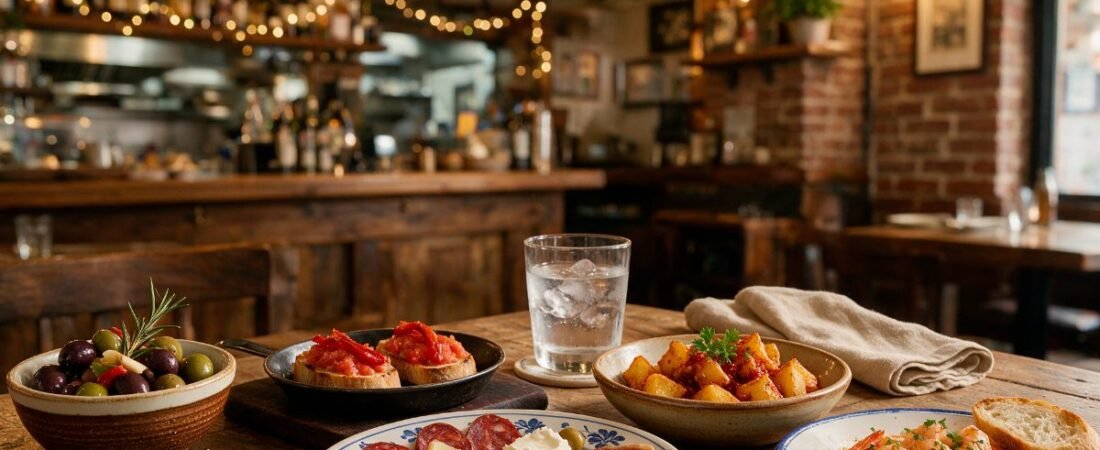
Food is often the best part of a trip, and restaurants are where travelers use Spanish the most. These phrases cover the full meal.
Getting a table
| English | Spanish |
|---|---|
| A table for two, please | Una mesa para dos, por favor |
| Do you have a reservation? | ¿Tiene reserva? |
| Can we sit outside? | ¿Podemos sentarnos fuera / en la terraza? |
| The menu, please | La carta / el menú, por favor |
Ordering
| English | Spanish |
|---|---|
| I would like… | Quisiera… / Me gustaría… |
| What do you recommend? | ¿Qué me recomienda? |
| What is the dish of the day? | ¿Cuál es el plato del día? |
| I’ll have the same | Lo mismo para mí |
| Water, with / without gas | Agua con / sin gas |
| Another one, please | Otro, por favor |
In Spain, many places offer a menú del día, a fixed-price lunch with several courses. In much of Latin America the equivalent is called almuerzo ejecutivo, comida corrida or similar, depending on the country.
Dietary needs and allergies
| English | Spanish |
|---|---|
| I am vegetarian | Soy vegetariano / vegetariana |
| Does it contain meat? | ¿Lleva carne? |
| I am allergic to peanuts | Soy alérgico / alérgica a los cacahuetes (Spain) / maníes (Latin America) |
| Without gluten, please | Sin gluten, por favor |
Allergies are serious. Write down your allergy in Spanish on your phone and show it to the staff instead of relying only on speaking, and ask clearly whether the dish contains the ingredient.
Paying
| English | Spanish |
|---|---|
| The bill, please | La cuenta, por favor |
| Is the tip included? | ¿Está incluida la propina? |
| Can we pay separately? | ¿Podemos pagar por separado? |
| Keep the change | Quédese con el cambio |
Tipping customs vary: in Spain a small tip is optional, while in many Latin American countries 10% is customary and sometimes already added to the bill. Check the receipt before you add more.
Next: back to the essential phrases.